

Overview Summary
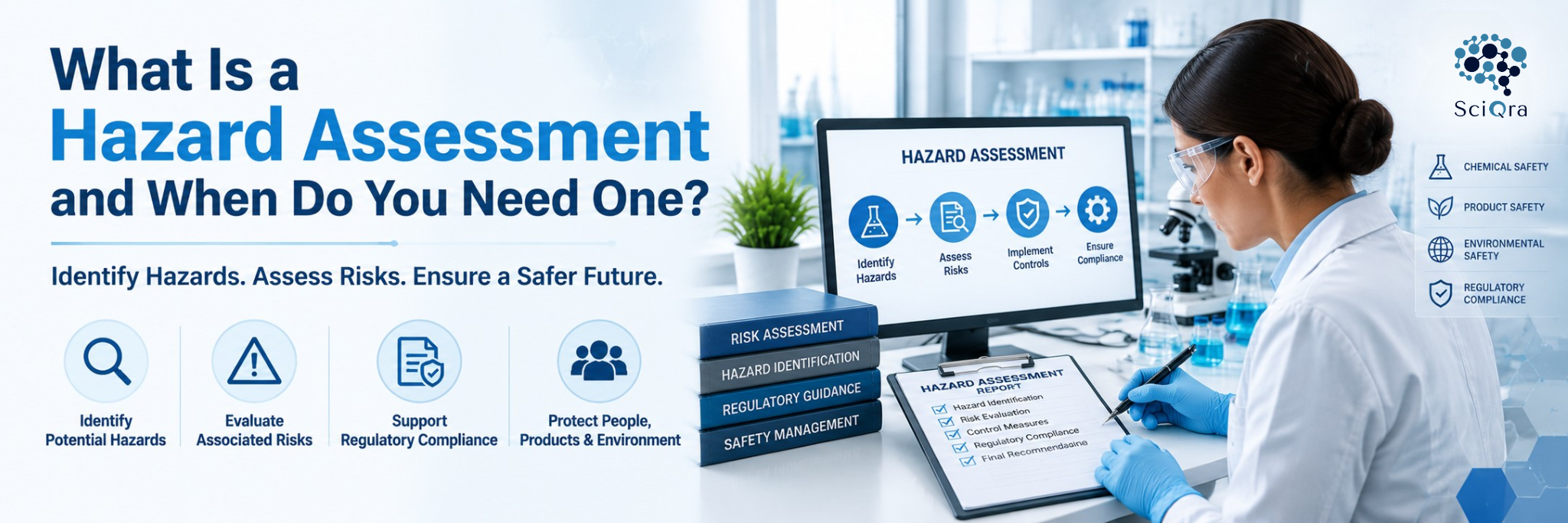
A hazard assessment is a systematic process for identifying workplace hazards (physical, chemical, biological, mechanical, electrical, and ergonomic) and evaluating the controls needed to prevent injury. Organizations conduct them before new tasks or equipment changes, after incidents, or as part of ongoing safety management. While it supports compliance and accident prevention, a hazard assessment complements—rather than replaces—broader risk assessment and safety practices.
Introduction
Most workplace injuries don't happen because a hazard was unknown; they happen because a known hazard wasn't identified, evaluated, or controlled before exposure. That gap between what a workplace actually contains and what safety teams have formally assessed is exactly what a hazard assessment is designed to close.
Whether you're running a manufacturing floor, a construction site, a laboratory, a warehouse, or a chemical processing facility, hazard assessment gives you a structured way to find problems before they cause harm, rather than reacting after an incident. This article explains what hazard assessment involves, how it differs from risk assessment, the main types organizations use, and the step-by-step process for conducting one, along with practical guidance on Occupational Safety and Health Administration (OSHA) considerations and when outside expertise makes sense.
What Is a Hazard Assessment?
A hazard assessment is a systematic process for identifying potential sources of harm in a workplace, task, or process, and determining what controls are needed to protect people from that harm. It connects hazard identification directly to employee safety by establishing what could go wrong before it actually does.
The process typically covers a wide range of hazard categories: physical, chemical, biological, mechanical, electrical, and ergonomic, depending on the workplace and activity being assessed. What makes a hazard assessment genuinely useful isn't just spotting hazards; it's the structured link between identifying a hazard and deciding which control measure addresses it, which separates a formal assessment from an informal walk-through.
Why Is Hazard Assessment Important?
Hazard assessment is crucial because it's fundamentally proactive, not a response to something that's already gone wrong. Identifying hazards before they cause an incident gives an organization the chance to select and implement appropriate controls while costs are still low, both financially and in terms of the physical and emotional toll on workers.
Beyond direct hazard prevention, the process supports broader safety management systems by feeding into workplace inspections, employee training, and continuous improvement efforts. Regulatory compliance often depends on this kind of proactive identification, since many applicable safety standards expect employers to know about the existing hazards in their operations rather than discovering them reactively. Over time, a consistent hazard assessment practice builds institutional knowledge about where risk concentrates in a specific workplace, which makes every subsequent safety decision more informed.
Quick Answer: Hazard assessment is important because it proactively identifies workplace hazards before they cause injury or illness, supports informed control selection, strengthens safety management systems, and helps organizations meet applicable regulatory expectations, rather than relying on incidents to reveal where hazards exist.
When Do You Need a Hazard Assessment?
A hazard assessment is generally warranted before starting a new task, introducing new equipment, or using new chemicals or materials, since these situations introduce hazards a workplace hasn't previously evaluated. It's equally relevant whenever workplace conditions or processes change in ways that could alter existing hazard profiles.
Other common triggers include bringing on new employees or contractors who may face unfamiliar hazards, following an incident or near miss that reveals a gap in prior assessments, and when routine workplace inspections uncover hazards that haven't been formally documented. Periodic safety reviews and non-routine or high-risk work, tasks performed infrequently enough that standard procedures may not fully account for their specific hazards, both warrant renewed assessment as well. The exact legal requirement for when a hazard assessment is mandatory depends on the applicable regulation, the specific workplace, the hazard involved, the industry, and the jurisdiction, so organizations should confirm their specific obligations rather than assuming one standard applies universally.
What Are the Main Types of Hazard Assessment?
Organizations use several different approaches to hazard assessment, often in combination, depending on what's being evaluated. A workplace hazard assessment takes a broad view of an entire facility or work area, while a job hazard analysis, sometimes called a job safety analysis, breaks a specific job down into its individual steps and evaluates the hazards at each stage.
Hazard assessment focuses more narrowly on a single task rather than an entire job role, and equipment or machinery hazard assessments evaluate the specific hazards associated with operating or maintaining a piece of equipment. Chemical hazard assessments examine the risks associated with handling, storing, or being exposed to specific substances, while environmental or occupational health hazard assessments look at broader exposure concerns like air quality, noise, or temperature extremes.
Industrial hazard assessments and process hazard assessments tend to apply in manufacturing and processing environments, often examining how hazards interact across an entire production system rather than a single task. Pre-job or pre-task hazard assessments happen immediately before work begins, giving workers a final check before exposure occurs, while change-based hazard assessments are triggered specifically by a modification to equipment, materials, or procedures. Not every organization uses the same classification system or terminology, and many blend elements of several approaches depending on their specific safety program.
A structured hazard assessment generally follows a consistent sequence, even though the depth of analysis varies by workplace and hazard complexity.
Define the work activity — identify the specific task, operation, equipment, process, or workplace area being assessed.
Identify potential hazards — systematically look for sources of potential harm relevant to that activity.
Identify who may be exposed — consider employees, contractors, visitors, and anyone else who could be affected.
Evaluate the risk — weigh factors like likelihood, severity, frequency, duration of exposure, and how many people are exposed.
Determine existing controls — document what safeguards, procedures, or equipment are already in place.
Identify additional controls — apply an appropriate hierarchy of controls to determine what further action is needed.
Implement controls — assign clear responsibility and set a realistic timeline for putting new controls in place.
Document the assessment — maintain records appropriate to the workplace and any applicable regulatory requirements.
Review and update — reassess whenever conditions, equipment, processes, or identified risks change.
Not every cosmetic product requires the same depth of testing or data collection. A well-established ingredient with a long history of safe use and substantial published literature may need far less new evidence than a novel ingredient with limited prior characterization.
How to Identify Hazards in the Workplace
Hazard identification works best when it covers the full range of hazard categories rather than focusing narrowly on the most visible risks:
Physical Hazards: Noise, heat, cold, vibration, radiation, and everyday risks like slips and trips.
Chemical Hazards: Toxic substances, corrosive materials, flammable chemicals, and general exposure risks.
Biological Hazards: Bacteria, viruses, and other biological materials workers might encounter.
Ergonomic Hazards: Repetitive motion, manual handling, awkward postures, and excessive force. (These often go unnoticed because their effects accumulate gradually rather than causing immediate injury.)
Mechanical Hazards: Moving machinery, crushing, cutting, entanglement, and pinch points.
Electrical Hazards: Exposed components, faulty wiring, electrical contact, and arc flash risks where relevant.
Other Key Risks: Fire and explosion hazards, broader environmental hazards, and psychosocial hazards where relevant to the workplace.
To catch these hazards effectively, organizations should use a multi-layered approach. Practical identification methods include structured workplace inspections, direct employee interviews, and ongoing safety observations, since workers performing a task daily often notice things periodic inspections miss. Additionally, incident records, near-miss reports, safety data sheets (SDSs), and equipment manuals provide documented evidence of where harm has previously occurred. Finally, process reviews and historical safety data round out a thorough effort, revealing patterns across time that a single point-in-time inspection wouldn't surface.
Hazard Assessment vs. Risk Assessment: What Is the Difference?
These terms get used interchangeably in casual conversation, but they describe two related, distinct steps in the same broader safety process.
A safety assessment can often be built substantially, or in some cases entirely, on existing scientific data, published literature, and prior safety evaluations, rather than requiring new animal or laboratory testing from scratch. Whether new testing is warranted depends on whether genuine data gaps exist that existing evidence can't adequately address.
What Is a Hazard Assessment Checklist?
A practical hazard assessment checklist provides a structured, repeatable format for documenting each identified hazard and the response to it. A simple, usable checklist typically includes the following fields for each identified hazard:
Task or activity being assessed
Location
Hazard description
People potentially exposed
Existing controls already in place
Risk considerations (likelihood, severity, frequency)
Additional controls needed
Responsible person
Target completion date
Review date
Follow-up status
The goal is a checklist simple enough to use consistently, rather than an overly complicated form that creates friction and gets skipped under time pressure.
What Are Common Workplace Hazards?
Physical hazards commonly include noise, heat, cold, vibration, radiation, and slip-and-trip risks, all of which appear across nearly every industry in some form. Chemical hazards include toxic substances, corrosive materials, flammable chemicals, and general chemical exposure, with specific risks varying widely depending on what substances a workplace handles and how occupational exposure limits have been set for those substances.
Mechanical hazards include moving machinery, crushing and cutting risks, entanglement, and pinch points, particularly relevant in manufacturing and industrial settings. Electrical hazards cover exposed electrical components, faulty wiring, direct electrical contact, and arc flash risk in applicable settings. Ergonomic hazards, repetitive motion, manual handling, awkward postures, and excessive force, tend to develop into injuries over time rather than causing sudden harm, which makes them easy to underestimate. Biological hazards, including bacteria, viruses, and other biological materials, are particularly relevant in healthcare and laboratory settings, though they can appear in other industries as well. This list shows common categories rather than an exhaustive inventory; every workplace should evaluate its own conditions rather than assuming these examples cover every hazard.
How Does the Hierarchy of Controls Help After Hazard Assessment?
Once a hazard assessment identifies a hazard, the hierarchy of controls provides a structured framework for selecting the most effective response, generally moving from most to least effective: elimination, substitution, engineering controls, administrative controls, and personal protective equipment.
Elimination removes the hazard entirely and is the most effective option when feasible. Substitution replaces a hazardous material or process with a less hazardous alternative. Engineering controls physically isolate people from a hazard, such as machine guarding or ventilation systems, while administrative controls change how people work around a hazard, through procedures, training, or scheduling. Personal protective equipment sits at the bottom of the hierarchy, protecting the individual worker rather than addressing the hazard itself.
Higher-level controls are generally preferred when feasible because they reduce or remove hazard exposure at the source, rather than depending on consistent human behavior or equipment use to be effective. Personal Protective Equipment (PPE) plays an important role, but it should not be treated as sufficient on its own when higher-level controls are genuinely achievable, since PPE effectiveness depends heavily on proper fit, consistent use, and maintenance, all of which can fail in ways that elimination or engineering controls don't.
OSHA Hazard Assessment Requirements
OSHA hazard-assessment requirements are hazard- and standard-specific rather than a single universal mandate covering every workplace and situation. Different OSHA standards address hazard identification and assessment obligations in different contexts, and which ones apply depends heavily on the specific industry, hazards present, and operations involved.
Employer responsibilities generally include identifying recognized workplace hazards and taking appropriate action to address them, a foundational expectation that runs through OSHA's broader regulatory framework. PPE hazard assessment is one specific, well-defined area where OSHA has established more explicit requirements for certain workplaces, distinct from the broader practice of general workplace hazard assessment. Job hazard analysis is widely used as a safety practice, and OSHA recommends it as a valuable tool, though it functions as a best-practice methodology rather than a single, standalone universal regulatory mandate applied identically everywhere. This area is closely tied to broader chemical safety assessment work, particularly hazard communication and exposure limits. Workplace inspections, industry- or hazard-specific OSHA standards, and specified documentation requirements all factor into a compliant hazard assessment program. Because these requirements are standard-specific and can be updated, employers should verify current OSHA requirements directly against official OSHA sources rather than relying on general summaries when confirming specific compliance obligations.
Hazard Assessment Examples Across Different Industries
Common Workplace Hazards by Industry
Manufacturing Environments: Commonly involve machinery hazards, chemical exposure, noise, and electrical system risks, often combined on a single production line.
Construction Sites: Typically present fall hazards, excavation risks, heavy equipment hazards, and electrical hazards, which often change as a project moves through different phases.
Warehousing Operations: Often center on forklift and material-handling equipment hazards, manual-handling risks, falling objects, and storage-system hazards, particularly in high-density racking environments.
Laboratories: Present chemical hazards, biological agent exposure, glassware-related risks, and equipment-specific hazards that vary considerably by the type of research or testing being conducted.
Healthcare Settings: Commonly involve biological exposure, sharps injuries, ergonomic hazards from patient handling, and exposure to hazardous substances including certain medications.
Medical Device Industry: Typically involves biocompatibility risks, sterility and sterilization hazards, cleanroom chemical exposures, equipment validation risks, and electrical or software safety factors associated with diagnostic and therapeutic devices.
Cosmetic Industry: Frequently involves raw material chemical exposures (including fragrances and preservatives), dermal and ocular irritation risks during formulation, heavy metal screening, and large-scale compounding or mixing hazards.
Chemical and Process Industries: Face toxic chemical exposure, fire and explosion risk, pressure-related hazards, and broader process hazards tied to how materials interact throughout a production system, an area where toxicological risk assessment often plays a direct role alongside traditional safety engineering.
These examples illustrate common hazard categories for each industry rather than an exhaustive list; actual hazards present in any specific workplace depend on its unique operations, materials, and processes.
Common Hazard Assessment Mistakes
Treating hazard assessment as a one-time activity, rather than an ongoing practice, is one of the most common mistakes, since workplaces change continuously and a single assessment quickly becomes outdated. Failing to involve employees who actually perform the work overlooks some of the most valuable hazard knowledge available, since workers often notice risks that periodic inspections miss entirely.
Ignoring non-routine work, tasks performed infrequently enough that standard procedures may not adequately address their specific hazards, creates blind spots in otherwise thorough programs. Focusing only on obvious physical hazards while overlooking chemical, ergonomic, or psychosocial risks produces an incomplete picture, and failing to properly identify who may actually be exposed, including contractors and visitors, leaves gaps in protection.
Choosing controls before properly identifying the hazard reverses the logical sequence a hazard assessment depends on, and relying primarily on PPE, when higher-level controls are genuinely feasible, under-addresses risk at its source. Ignoring changes in equipment or processes, failing to document actions taken, and not following up on identified hazards all undermine an otherwise sound assessment. Using outdated information and failing to review assessments after incidents or near misses both leave known gaps unaddressed longer than necessary.
How Often Should a Hazard Assessment Be Reviewed?
Review hazard assessments whenever a significant change introduces new or altered hazards, rather than following one fixed universal interval that applies to every workplace. Review frequency genuinely depends on workplace conditions, applicable regulations, the specific industry, and the overall hazard level involved.
Changes in processes, new equipment, new materials, incidents, near misses, and findings from routine inspections all warrant a fresh look at existing assessments, since any of these can meaningfully change a previously documented hazard picture. Higher-hazard environments often warrant more frequent scheduled reviews than lower-risk workplaces, but there's no single interval, whether annual, quarterly, or otherwise, that applies uniformly across every industry and jurisdiction. Organizations should set a review cadence that matches their specific hazard profile and applicable regulatory expectations, rather than assuming a generic timeframe is automatically sufficient.
How Hazard Assessments Support Workplace Safety Compliance
Hazard assessment is the starting point in a broader safety chain: hazard identification feeds into risk evaluation, which informs the selection of hazard controls, which are then documented, monitored, and continuously improved over time. Each link in that chain depends on the one before it, which is why a weak or outdated hazard assessment tends to undermine everything built on top of it.
This process supports safety management systems and broader EHS programs by giving them a factual foundation, and it directly informs employee training, since workers need to understand the hazards relevant to their role. Workplace inspections become more targeted when they're informed by a documented hazard assessment, and the overall practice supports accident prevention and risk mitigation more broadly. It's worth being precise: hazard assessment supports compliance and safety; it doesn't guarantee them. Completing a hazard assessment is an important step within broader regulatory compliance efforts, but it doesn't, on its own, mean every applicable regulatory obligation has been satisfied or that a workplace is free of risk.
When Should You Work With a Safety Professional?
Complex industrial processes, high-risk operations, and significant chemical hazards often warrant professional support beyond what internal teams can provide, particularly when process safety concerns are involved. Specialized equipment, overlapping regulatory requirements, and serious past incidents are additional signals that outside expertise may add real value, especially when toxicology consulting services can translate complex chemical hazard data into practical exposure limits and controls.
Complex risk controls that require specialized engineering knowledge, limited internal safety expertise, and building a formal EHS management system from the ground up are all situations where a qualified safety professional can meaningfully accelerate progress. Professional support can help identify hazards more systematically, evaluate risk with greater scientific rigor, recommend controls appropriate to the specific hazard involved, and strengthen a safety program's overall structure, particularly in specialized areas like chemical exposure assessment.
Key Takeaways
A hazard assessment identifies potential sources of harm and connects that identification to appropriate risk controls.
Hazard and risk are related but distinct concepts; hazard identifies what could cause harm, while risk evaluates likelihood and severity.
Conduct hazard assessments before introducing new tasks, equipment, or materials, and whenever conditions change.
Employee involvement significantly strengthens hazard identification, since workers often notice risks inspections miss.
The hierarchy of controls, from elimination through PPE, guides which control measures to prioritize after hazards are identified.
OSHA hazard assessment requirements are standard-specific, not a single universal mandate covering every workplace.
Documentation and follow-up are essential; an identified hazard without a documented response undermines the entire process.
Review frequency depends on workplace conditions and hazard level, not a fixed interval that applies everywhere.
Hazard assessment supports accident prevention and compliance efforts but doesn't guarantee either outcome on its own.
Continuous safety improvement depends on treating hazard assessment as an ongoing practice rather than a one-time activity.
Conclusion
A hazard assessment is the structured process of identifying what could cause harm in a workplace and determining what controls are needed to prevent it, and it works best as an ongoing practice rather than a one-time exercise. Conducted before introducing new tasks, equipment, or materials, and revisited whenever conditions change, it gives organizations a proactive way to address risk before an incident forces the issue.
Applying the hierarchy of controls after identifying hazards, documenting the process thoroughly, and reviewing assessments regularly all strengthen the overall approach. While hazard assessment meaningfully supports workplace safety and regulatory compliance, it works best as part of a broader safety management effort, not a standalone guarantee. If your organization is building or strengthening a hazard assessment program, particularly around chemical exposure or complex industrial processes, working with an experienced safety or toxicology professional can help ensure the process holds up under real-world conditions.
Frequently Asked Questions
What is the purpose of a hazard assessment?
The purpose is to proactively identify hazards before they cause injury or illness, giving organizations the opportunity to select and implement appropriate controls in advance. It supports broader safety management systems, informs employee training, and provides documentation that demonstrates a structured approach to hazard identification, rather than relying on incidents to reveal where risks exist.
When do you need a hazard assessment?
You generally need a hazard assessment before starting new tasks, introducing new equipment or chemicals, or when workplace conditions or processes change. It's also warranted after an incident or near miss, when inspections identify hazards, and during periodic safety reviews. The specific legal requirement depends on the applicable regulation, workplace, hazard, industry, and jurisdiction involved.
How do you perform a workplace hazard assessment?
The process generally involves defining the work activity, identifying potential hazards, determining who may be exposed, evaluating risk factors like likelihood and severity, and reviewing existing controls. Then identify additional controls using the hierarchy of controls, assign responsibility, implement them, and document the assessment. Review and update the assessment whenever conditions, equipment, or processes change.
What is the difference between hazard assessment and risk assessment?
A hazard assessment identifies potential sources of harm by answering what could cause harm. A risk assessment evaluates the likelihood and severity of that harm occurring, helping prioritize which hazards need the most urgent attention. Terminology varies across organizations, and some frameworks combine both steps into a single, broader risk assessment process.
What are the main types of hazard assessment?
Common types include workplace hazard assessments, job hazard analysis, task-specific assessments, equipment or machinery hazard assessments, chemical hazard assessments, and process hazard assessments, among others. Organizations often use several types together depending on what they're evaluating, and not every organization uses the same classification system or terminology.
Does OSHA require hazard assessments?
OSHA hazard assessment requirements are hazard- and standard-specific, not a single universal requirement covering every workplace. Certain areas, like PPE hazard assessment, have more explicit OSHA requirements, while job hazard analysis is a widely recommended best practice rather than a single standalone mandate. Employers should verify current requirements against official OSHA sources for their specific industry and hazards.
How often should a hazard assessment be reviewed?
Review frequency depends on workplace conditions, applicable regulations, industry, and hazard level, rather than a fixed interval that applies to every workplace. Review assessments whenever significant changes occur, including new equipment, new materials, process changes, incidents, near misses, or relevant inspection findings, since any of these can change the previously documented hazard picture.