

Introduction
Every regulatory submission, whether for a pharmaceutical, industrial chemical, or a food additive relies on adequate scientific evidence to support safety and other applicable regulatory requirements. In practice, organizations may already have a considerable amount of information available, including toxicology studies, published literature, supplier documentation, historical safety assessments, or information from previous regulatory submissions. The challenge is not always finding data. It is determining whether the available evidence is sufficient, relevant, and appropriate for the specific regulatory purpose.
This is where a Toxicology Data Gap Analysis can be valuable. It provides a structured way to review the existing toxicological and safety information against the expectations of a particular regulatory pathway. The objective is to understand what the current evidence can support, where additional information or scientific justification may be needed, and what should be addressed before a regulatory submission.
What Is a Toxicology Data Gap Analysis and How Does It Work?
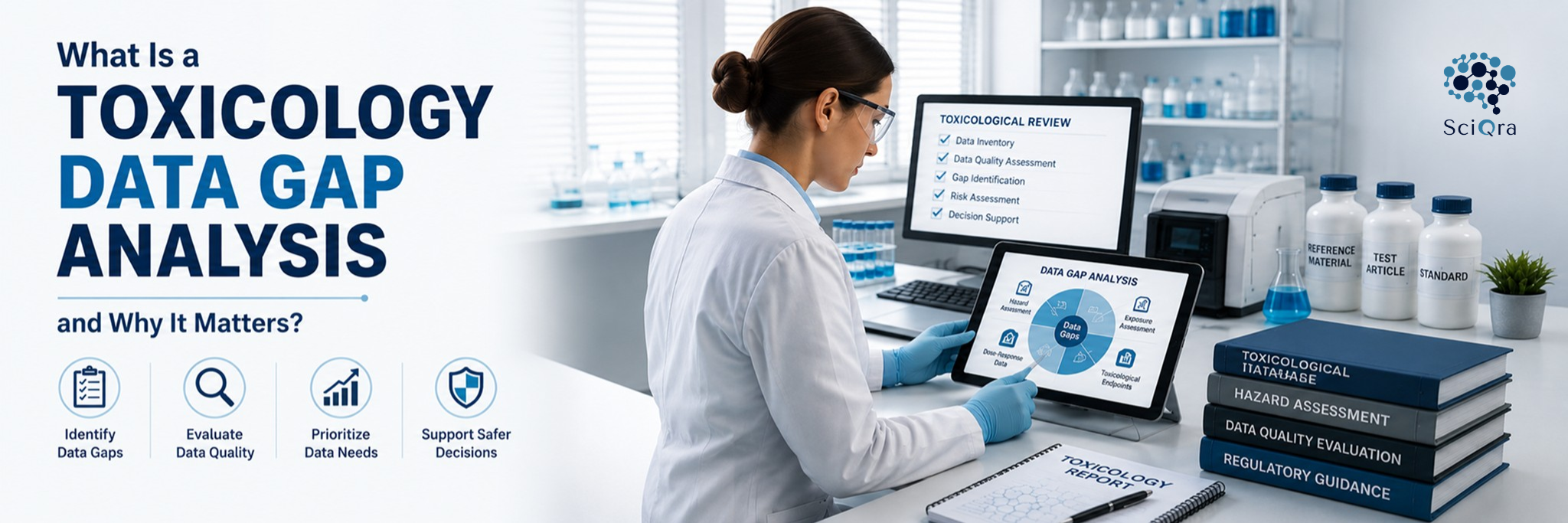
A toxicology data gap analysis is a structured scientific evaluation of available toxicological and safety information against the evidence required for a specific regulatory framework. The objective is not simply to identify missing studies or data. Instead, the analysis assesses whether the existing package of evidence is adequate to support a safety assessment, regulatory submission, or product registration.
The output is a clear map of what exists, what's missing, and what needs to be generated or otherwise addressed before a data can be submitted.Depending on the product and regulatory pathway, the assessment may consider:
Existing toxicology studies
Published scientific literature
Human safety information, where available
Exposure and intended-use information
Substance identity and composition
Impurities and metabolites
Supplier-provided safety information
Previous regulatory assessments or decisions
Read-across or analogue information
This work connects hazard identification, exposure assessment, and risk assessment, since a gap in any one of these areas can undermine the overall regulatory toxicology data assessment.
How Does a Toxicology Data Gap Analysis Work?
Although the scope may vary depending on the product type and regulatory pathway, the process generally follows a structured approach.
A Toxicology Data Gap Analysis begins by identifying the applicable regulatory requirements for a substance based on its intended use and target market. Available toxicological and safety information is then collected and reviewed for quality, relevance, and regulatory applicability. The existing evidence is compared against the required toxicological endpoints to determine whether the available data adequately support the intended registration or safety assessment.
Where potential gaps are identified, the next step is to determine how significant they are and whether they can be addressed using existing evidence or an appropriate scientific approach. Depending on the regulatory context, this may involve further literature review, read-across, weight-of-evidence evaluation, scientific justification, or generation of additional data where necessary
The outcome is a clear understanding of the strength of the existing evidence, the remaining information needed, and the actions that may be required to address identified data gaps.
Why Is a Toxicology Data Gap Analysis Important?
A Toxicology Data Gap Analysis helps organizations determine whether their existing safety information is sufficient to support a regulatory submission. Having toxicological data available does not necessarily mean that the data will meet the expectations of a particular regulatory pathway.
Regulatory authorities may consider factors such as study quality, reliability, relevance, endpoint coverage, exposure conditions, and the applicability of the evidence to the substance and its intended use. Existing studies may therefore require further evaluation even when the underlying data are available.
Conducting a Toxicology Data Gap Analysis provides an opportunity to identify these considerations early. It can help determine:
Whether existing evidence adequately addresses the applicable requirements
Which information needs are most important
Whether existing data can be used more effectively
Whether scientific justification or alternative approaches may be appropriate
Whether additional toxicological data may actually be necessary
For products intended for registration in multiple jurisdictions, the analysis can also help identify common data requirements and market-specific expectations, supporting a more efficient global regulatory strategy.
What Happens When a Toxicology Data Gap Is Identified?
Identifying a data gap does not automatically mean that a new toxicology study evidence is required. The ideal next step is to determine its regulatory significance and the most appropriate way to address it.
Depending on the nature of the gap and the applicable regulatory requirements, the available options may include:
Further evaluation of existing data, where applicable
Additional literature or scientific review
Read-across or analogue assessment
Weight-of-evidence approach
Use of relevant alternative or non-animal approaches
Generation of additional toxicological data, where necessary
The objective is therefore not to generate more data simply because a gap has been identified. The objective is to develop a scientifically justified and proportionate strategy for addressing the gap.
Toxicology Data Gap Analysis Across Different Industries
The data expectations depend on the product, intended use, exposure, and applicable regulatory framework.
For pharmaceuticals and biopharmaceuticals, the assessment may focus on structured nonclinical requirements, while cosmetic ingredients may rely more heavily on existing literature, in vitro data, human experience, exposure assessment, and read-across, particularly where animal testing restrictions apply.
For chemicals, requirements may vary with factors such as regulatory framework, tonnage, use, and exposure. A structured chemical safety assessment often reveals these gaps early. While food ingredients may place greater emphasis on dietary exposure, proposed use levels, history of safe use, and supporting toxicology data.
Toxicology Data Gap Analysis vs. Toxicology Risk Assessment
A Toxicology Data Gap Analysis and a Toxicology Risk Assessment (TRA) serve different purposes, although they may be closely connected.
A data gap analysis evaluates whether the available toxicological and safety evidence is sufficient for the intended regulatory purpose. A TRA, on the other hand, evaluates the available hazard and exposure information to determine whether the substance can be considered safe, or whether the identified risk is acceptable, under the intended conditions of use.
How Can SciQra Support Toxicology Data Gap Analysis?
SciQra supports organizations in reviewing existing toxicological and safety information against applicable regulatory requirements and developing scientifically defensible strategies to address identified information needs. Our team works across pharmaceutical, chemical, and food ingredient programs, applying the same rigorous approach to safety data interpretation and toxicology risk evaluation regardless of the regulatory pathway involved.
Depending on the project, the work may include:
Review of existing toxicology and safety data
Scientific literature and regulatory assessment review
Evaluation of relevant toxicological endpoints
Identification and prioritization of data gaps
Assessment of read-across and other scientifically justified approaches
Scientific justification of existing evidence
Recommendations for additional data generation, where appropriate
Alignment of toxicology findings with regulatory submission requirements
The focus is not simply on identifying what is missing. It is on understanding what the existing evidence can support, what requires further evaluation, and what the most appropriate next steps may be for the intended regulatory pathway.
Conclusion
A Toxicology Data Gap Analysis provides a structured way to understand whether the available safety evidence is adequate for a specific regulatory purpose. It helps identify where existing data are sufficient, where further evaluation or scientific justification may be needed, and where additional data may genuinely be required. Early assessment doesn't guarantee a smooth path to approval, but it consistently improves regulatory preparedness and reduces the uncertainty that drives costly, last-minute decisions. Importantly, identifying a data gap does not automatically mean generating new data. The value of the assessment lies in understanding the evidence as a whole and determining the most scientifically appropriate path forward.
If your organization needs a clear-eyed assessment of where your toxicology data stands, SciQra's team can help you evaluate existing evidence, identify gaps, and build a scientifically defensible strategy for registration. Contact SciQra to discuss your product's toxicology data requirements and next steps.
Frequently Asked Questions
What is toxicology data gap analysis?
Toxicology data gap analysis is a scientific evaluation that compares a substance's existing toxicological and safety data against the evidence required for a specific regulatory pathway. It identifies information that is missing, outdated, or insufficient to support a registration decision. Unlike a simple inventory of available studies, it actively measures that evidence against defined regulatory expectations, giving companies a clear picture of where their data package stands before submission.
Does identifying a toxicology data gap always mean that a new study is required?
No. A gap simply means the current evidence doesn't clearly meet regulatory expectations, not that new testing is automatically necessary. Many gaps can be addressed through a more thorough literature review, read-across from structurally similar substances, or a well-documented scientific justification. Whether new testing is warranted depends on the significance of the gap, the regulatory pathway, and whether alternative, scientifically defensible evidence can reasonably close it.
When is a toxicology data gap analysis required?
Typically, it should be considered before significant regulatory submission activities or additional testing decisions are made. Performing the assessment early gives more flexibility to evaluate existing evidence, prioritize genuine data needs, and develop an appropriate strategy before timelines and resources become constrained.
Does a Toxicology Data Gap Analysis determine whether a product is safe?
Not by itself. A data gap analysis evaluates the adequacy of the available evidence for the intended regulatory purpose. Determining safety or risk requires a broader scientific assessment that considers relevant hazard, exposure, and other supporting information.
How does toxicology gap analysis support global regulatory submissions?
A Toxicology Data Gap Analysis can help compare toxicology and safety data expectations across different regulatory frameworks and jurisdictions, such as those involving FDA, EMA, ICH, and REACH. It helps identify where existing evidence may support multiple markets and where jurisdiction-specific requirements or additional justification may need to be addressed.